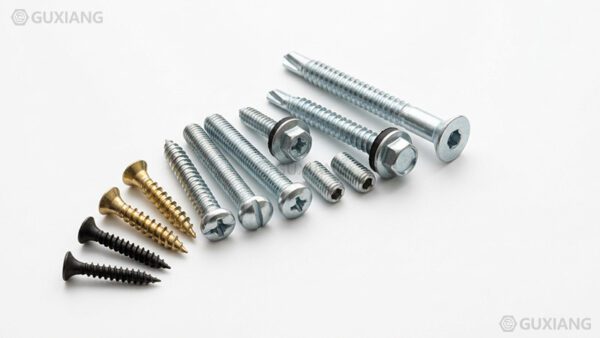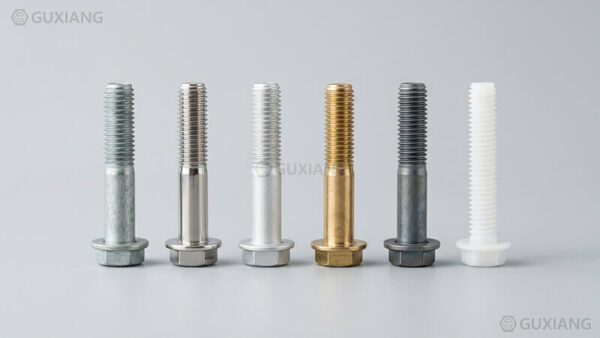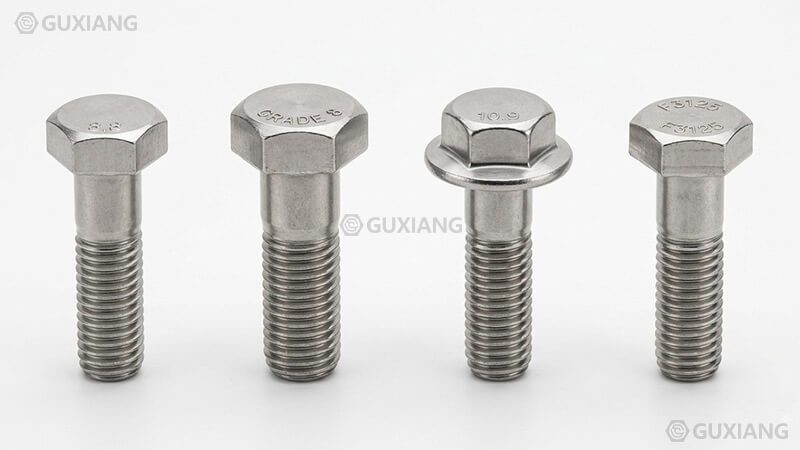
A hex bolt can look like a straightforward component, but choosing the right one requires more than matching its diameter and length. Thread configuration, material, strength requirements, dimensional tolerances, and surface finish all affect whether a fastener is suitable for its intended assembly.
The distinction becomes especially important when sourcing for industrial machinery, automotive components, steel structures, or OEM production. Two bolts that look similar may be manufactured to different standards or intended for different types of joints.
This guide explains the main types of hex bolts, the standards used to specify them, and the details engineers and purchasing teams should check before placing an order. It also covers torque and preload practice, and provides a practical specification checklist for sourcing standard and custom fasteners.
What Are Hex Bolts?
A hex bolt is an externally threaded fastener with a six-sided head designed for engagement by a wrench or socket. The hexagonal profile provides convenient tool access and allows tightening or removal without a specialized drive recess.
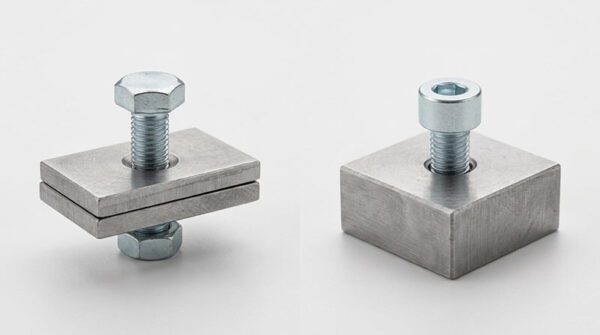
Hex bolts are commonly used to clamp components together. Depending on the product design and application, they may pass through clearance holes and work with a nut, or engage with a tapped hole.
Typical applications include machinery frames, equipment housings, metal structures, brackets, vehicle assemblies, and industrial fixtures.
The term hex bolt is widely used in purchasing and manufacturing, but it does not identify every dimensional or mechanical requirement. In particular, American inch-series standards distinguish certain hex bolts from hex cap screws, while metric standards use product designations such as hexagon head bolts and hexagon head screws.
For that reason, a reliable purchasing specification identifies the applicable standard and part requirements rather than relying on the product name alone. For a broader overview of fastener categories, see the Industrial Fasteners Types guide.
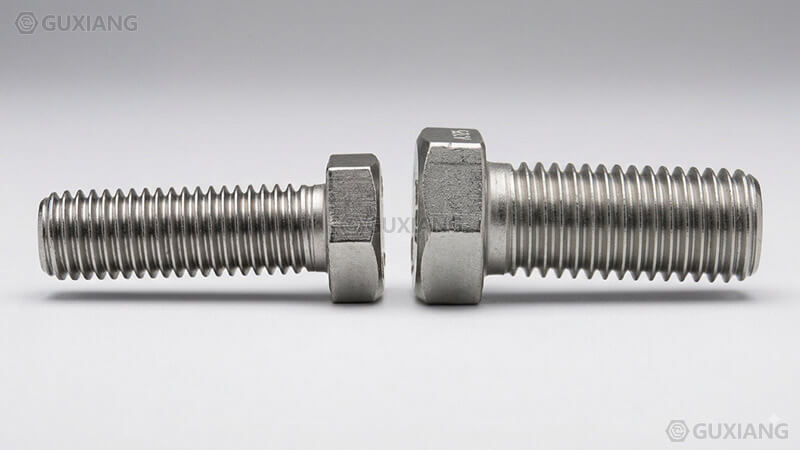
Types of Hex Bolts and How They Differ
Hex bolts can be classified by head geometry, thread configuration, material, and the requirements of the assembly. These categories overlap, so a bolt should be selected by the complete specification rather than by a single feature.
Standard Hex Bolts
Standard hex bolts have a conventional six-sided head and a threaded shank. They are commonly used in general machinery, equipment assembly, maintenance, and other applications where the specified dimensions and mechanical properties meet the joint requirements.
They may be supplied with different thread lengths, materials, strength specifications, and finishes. The correct choice depends on the joint design and applicable product standard.
For common product categories and sourcing options, consult the Bolts: Types, Materials & Selection Guide.
Heavy Hex Bolts
Heavy hex bolts have a larger hexagonal head profile than the corresponding standard hex product defined by the relevant dimensional standard. They are commonly associated with structural bolting and other applications requiring a specifically defined heavy-hex product.
A heavy hex bolt should not be selected solely because its head appears more substantial. In structural steel connections, the bolt, nut, washer where required, mechanical requirements, and installation procedure must comply with the governing project specification.
For applicable inch-series structural products, ASME B18.2.6 addresses dimensional requirements for structural fasteners, while ASTM F3125/F3125M specifies requirements for high-strength structural bolting.
Hex Flange Bolts
A hex flange bolt incorporates a flange beneath the head. The flange provides an enlarged bearing surface compared with a conventional head without an integral flange.
This design can be useful when the joint requires a broader bearing area or when the specified assembly is designed around the flange geometry. However, a flange does not automatically replace a separate washer in every application. The decision depends on the drawing, bearing surface, mating material, and assembly requirements.
Where clamping behavior or surface damage matters, assess the complete joint rather than the bolt head in isolation.
Fully Threaded Hex Bolts and Partially Threaded Hex Bolts
One of the most useful distinctions is the location of the threads along the shank.
Fully threaded hex bolts have threads extending along the specified threaded portion of the shank up to the underhead region defined by the product standard. They can provide flexibility when the assembly requires threaded engagement over a greater portion of the fastener.
Partially threaded hex bolts have an unthreaded shank section between the head and the threaded portion. That smooth section can be important when the joint design places a defined grip length or bearing surface through the connected components.
The choice should follow the joint geometry. Where shear loading is involved, the position of the threads relative to the shear plane may matter. It is not correct to assume that a fully threaded bolt is always stronger, or that a partially threaded bolt is always better.
The thread length, grip length, component thicknesses, and applicable standard should be reviewed together before selecting a replacement.
Hex Cap Screws: Similar Appearance, Different Product Requirements
Hex bolts and hex cap screws may look almost identical, especially when viewed in a product catalog. In inch-series purchasing, however, they can be defined as different product types under ASME dimensional standards.
A hex cap screw is commonly associated with a controlled bearing face and dimensional requirements suited to the specified product. Depending on the application, it may be installed into a tapped hole or used with a nut.
A hex bolt may have different dimensional requirements and may be selected for a through-hole assembly.
Terminology can vary between suppliers, catalogs, and regions, so appearance and everyday naming are not sufficient for engineering approval. Confirm the governing standard, head and bearing geometry, thread configuration, and installation arrangement.
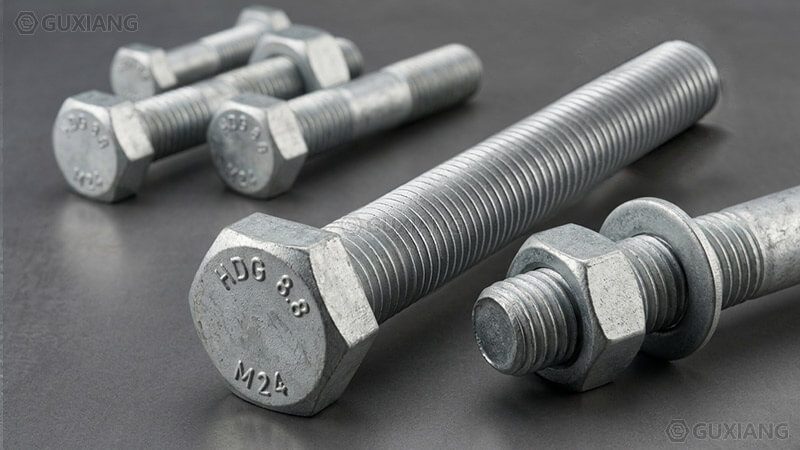
Hex Bolt Standards: ISO, ASME, ASTM, and SAE
Standards serve different purposes. Some establish product dimensions; others specify material, mechanical properties, or requirements for a particular type of joint.
A common sourcing mistake is to specify only a strength class when the drawing also requires a particular head geometry, thread configuration, or dimensional tolerance. A complete specification may need more than one standard.
Metric Hex Bolt Standards
The following ISO standards are useful reference points for metric hexagon head fasteners. Their official scopes identify the applicable product forms and thread ranges.
| Standard | Main scope | When it matters |
|---|---|---|
| ISO 4014:2022 | Hexagon head bolts, product grades A and B, with metric coarse-pitch threads from M1.6 to M64, in steel and stainless steel | Standard metric hexagon head bolts |
| ISO 4017:2022 | Hexagon head screws, product grades A and B, with metric coarse-pitch threads from M1.6 to M64, in steel and stainless steel | Standard metric hexagon head screws, commonly used when a fully threaded form is specified |
| ISO 4015:2022 | Reduced-shank hexagon head bolts, product grade B, with coarse-pitch threads from M3 to M20 | Applications requiring the defined reduced-shank product |
| ISO 8765:2022 | Hexagon head bolts with metric fine-pitch threads from M8 × 1 to M64 × 4, product grades A and B | Applications where a specified fine-pitch thread is required |
The ranges above are taken from the published ISO scope descriptions. They identify the scope of those product standards; they should not be interpreted as a guarantee that every size, material, finish, and configuration is commercially available from every supplier.
The dimensional product standard also does not, by itself, establish every mechanical property of the finished fastener. ISO 4014 and ISO 4017 refer users to the applicable property standards for requirements that are not fully specified by the product standard.
Inch-Series Hex Bolt Standards
For the North American market, ASME dimensional standards and material or mechanical specifications often work together.
ASME B18.2.1 covers dimensional requirements for inch-series square and hex bolts and screws, including defined product types such as hex bolts and hex cap screws. The official ASME listing identifies the edition as 2012, reaffirmed in 2021, and explains that heavy hex structural bolt dimensional requirements are covered separately by ASME B18.2.6.
ASME B18.2.6 covers fasteners for use in structural applications. It defines dimensional requirements for specified structural products; it does not replace the material and mechanical requirements of the applicable ASTM specification.
Official references:
ASTM Standards for Material and Mechanical Requirements
ASTM specifications are important when a purchase order or engineering drawing calls for a defined material and mechanical performance requirement.
| Standard | General scope | Typical specification context |
|---|---|---|
| ASTM A307 | Carbon steel bolts, studs, and threaded rod | General-purpose fasteners and specified bolting applications |
| ASTM F3125/F3125M | High-strength structural bolts and assemblies made from heat-treated steel or alloy steel | Structural connections requiring the applicable high-strength bolting specification |
| ASTM A354 | Quenched and tempered alloy steel bolts, studs, and other externally threaded fasteners | Applications requiring the strength levels and conditions defined in the specification |
| ASTM F1554 | Steel anchor bolts and related anchoring products covered by the standard | Anchoring structural components to concrete or foundations |
These standards are not interchangeable. For example, ASTM F1554 is an anchor-bolt specification, not a general standard for every conventional hex bolt.
ASTM F3125/F3125M consolidated several earlier structural-bolting specifications. Project documents may still refer to familiar legacy designations, so buyers should confirm the required specification and edition rather than automatically converting a designation without engineering review.
ASTM publishes revisions to its fastener standards. Check the applicable edition in the ASTM Fastener Standards catalogue before preparing a new drawing or purchase order.
Mechanical Property Standards: ISO 898-1, ISO 3506-1, and SAE J429
After selecting the product dimensions, establish the required mechanical properties.
ISO 898-1 specifies mechanical properties for bolts, screws, and studs made from carbon steel and alloy steel with designated property classes. The version published in 2013 was reviewed and confirmed by ISO in 2025 as remaining current.
ISO 3506-1 specifies mechanical properties for corrosion-resistant stainless steel bolts, screws, and studs. Its 2020 edition was also reviewed and confirmed in 2025.
SAE J429 covers mechanical and material requirements for specified inch-series steel bolts, screws, studs, and related externally threaded fasteners within its scope.
Official references:
This distinction is especially important when comparing a metric property class, an SAE grade, and an ASTM specification. These labels belong to different standards and should not be treated as equivalent based on their names alone.
For a broader comparison, see DIN vs. ISO vs. ANSI/ASME Fastener Standards Explained.
Hex Bolt Materials, Grades, and Head Markings
Material selection should start with the mechanical requirements and operating environment, not just the appearance of the fastener.
Carbon Steel Hex Bolts
Carbon steel is widely used for hex bolts because it supports a broad range of general engineering and industrial applications. Depending on the specified grade and manufacturing condition, carbon steel fasteners can meet different mechanical requirements.
The material designation alone does not establish the complete performance of the finished fastener. Heat treatment, mechanical property class or grade, dimensions, and surface treatment may all be specified independently.
For additional guidance, see the Carbon Steel Fasteners Guide.
Alloy Steel Hex Bolts
Alloy steel may be selected when the design requires particular mechanical properties that are not met by the specified carbon steel option. The correct choice depends on the governing product standard, required strength, heat treatment, and service conditions.
Do not assume that an alloy steel bolt automatically meets the requirements for structural bolting, high-temperature service, or every high-strength application. The applicable standard must cover the intended use.
Stainless Steel Hex Bolts
Stainless steel fasteners are often selected for corrosion-sensitive applications, but the choice of grade still matters.
The operating environment, particularly exposure to chlorides, chemicals, cleaning agents, and crevices, influences the appropriate material. Stainless steel does not mean corrosion-proof under all conditions.
Review the Stainless Steel Grades for Fasteners guide and 304 vs. 316 Stainless Steel Fasteners when comparing common stainless options.
How to Read Hex Bolt Grades and Head Markings
Head markings can help identify a fastener’s manufacturer or specified grade, depending on the governing standard. However, the marking system varies among ISO property classes, SAE grades, ASTM specifications, and other product requirements.
An ISO property class such as 8.8 is not the same designation system as SAE Grade 8. Similar-looking numbers do not establish equivalence.
For purchasing and incoming inspection, check the marking against the drawing, applicable standard, supplier documentation, and required traceability records. Do not rely on head appearance alone when the fastener is intended for a critical assembly.
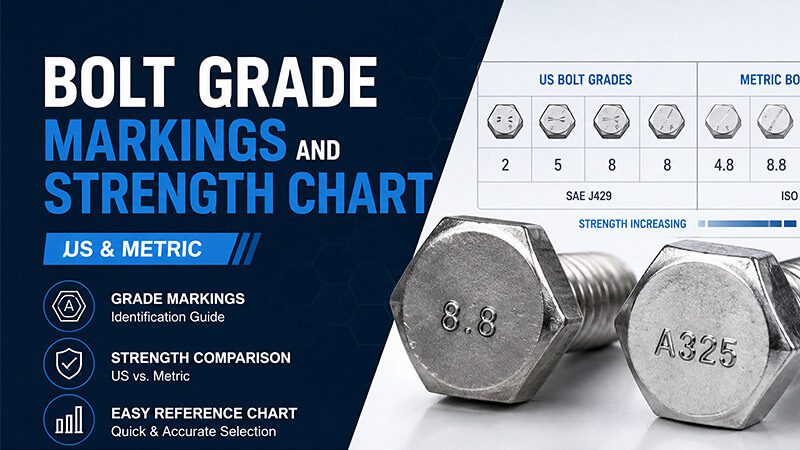
See the Bolt Grades Chart and Bolt Grade Markings and Strength Chart for additional reference information.
Choosing the Right Hex Bolt for the Application
The best hex bolt is the one that meets the joint’s requirements. These considerations should be reviewed together.
Construction and Structural Steel
Structural connections may require a defined high-strength bolting system rather than a generic commercial hex bolt. The product standard, bolt and nut compatibility, washer requirements, installation method, and inspection requirements should follow the project specification.
For critical structural connections, do not substitute a visually similar bolt without verifying that the replacement satisfies the governing requirements.
Industrial Machinery and Equipment
Machinery applications may prioritize clamp load, joint alignment, resistance to operating loads, maintainability, and dimensional fit.
Check whether the bolt passes through clearance holes and works with a nut, or engages with a tapped component. The thread position, grip length, and bearing surface should match the design.
For equipment subject to repeated loading or vibration, the joint design and securing method must be assessed as a whole. A bolt grade by itself cannot guarantee that a connection will remain secure.
Automotive and Transport Equipment
Automotive applications often require a specific balance of mechanical performance, dimensional control, surface treatment, and production traceability. A general-purpose hex bolt should not replace a drawing-specified automotive fastener merely because its nominal diameter and length match.
Where the joint depends on controlled tightening, use the specified torque-tension or installation procedure. Lubrication, coating, thread condition, and mating surfaces can all affect tightening behavior.
Outdoor, Coastal, and Corrosive Environments
Environmental exposure should guide the choice of material and surface treatment. A carbon steel bolt with a protective coating may be appropriate for some applications, while other environments may require a corrosion-resistant alloy or stainless steel.
Zinc plating and hot-dip galvanizing are different processes with different coating characteristics. Their suitability depends on exposure severity, dimensions, and the intended service requirements.
Review What Is Zinc Plating? and Galvanized vs. Zinc-Plated Fasteners before specifying a finish. For severe chloride exposure, material grade and joint compatibility should also be evaluated.
Torque, Preload, and Installation
Torque is the input; preload is the output that holds the joint. A correctly graded bolt installed with the wrong torque practice can still fail, so the tightening method deserves as much attention as the bolt specification.
The Torque Equation and Nut Factor
The familiar shortcut equation is T = K × d × F, where T is torque, K the nut factor, d the nominal diameter, and F the target preload. K absorbs the real-world variables that a calculation cannot see: friction under the head, friction in the threads, and the condition of both surfaces.
Published nut factors vary by source and surface condition. Values around K = 0.20 for dry steel, K = 0.15 for lubricated threads, and K closer to 0.13 with anti-seize or wax are common starting references. The practical consequence is significant: at the same target preload, a lubricated joint typically needs roughly 30 percent less torque than a dry one, which is why a torque figure quoted without a friction condition is not a complete specification.
Torque Reference Table
The table below lists representative starting torques for Grade 8.8 and Grade 10.9 metric hex bolts from M6 to M24, dry and lubricated, with standard nuts.
| Size | Grade 8.8 dry (Nm) | Grade 8.8 lubricated (Nm) | Grade 10.9 dry (Nm) | Grade 10.9 lubricated (Nm) |
|---|---|---|---|---|
| M6 | 10 | 7 | 14 | 10 |
| M8 | 25 | 18 | 35 | 25 |
| M10 | 50 | 35 | 70 | 50 |
| M12 | 85 | 60 | 120 | 85 |
| M16 | 210 | 150 | 300 | 210 |
| M20 | 410 | 290 | 580 | 410 |
| M24 | 700 | 500 | 1000 | 700 |
Treat these values as a starting point for initial checks, not as the approved installation requirement. Lubricated stainless joints in particular can need substantially less torque before galling begins, and the governing project specification takes precedence over any generic table.
Why Lubrication Matters
Stainless steel threads are prone to galling: under turning load, material can transfer between the mating surfaces and seize the joint, leaving the assembler with a spun head or a bolt that has to be drilled out. A compatible anti-seize or wax on stainless threads is often the difference between a clean installation and a damaged one.
Lubrication also makes a torque reading meaningful. Because K changes with surface condition, an unqualified torque value leaves preload uncertain; a stated friction condition turns the same wrench reading into a usable specification.
Target Preload
A common target range is 70 to 90 percent of proof load in a properly prepared joint. Below roughly 70 percent, clamp load may fall short of the separating load and the joint can slip under transverse forces. Above roughly 90 percent, small torque errors crowd the yield point and the fastener can snap during installation.
For structural work governed by ASTM F3125/F3125M, follow the turn-of-nut method or a direct tension indicator called out in the project documents, rather than relying on a torque wrench alone. Calibrated tooling, verified thread condition, and controlled installation sequence apply to critical joints.
Bottom line: torque practice is part of the specification. State the target preload, the friction condition, and the installation method together, and the joint behaves as designed.
How to Specify Hex Bolts Correctly
A complete specification reduces the risk of receiving fasteners that look correct but do not match the drawing or application.
Confirm the Product Standard
Identify the governing product or dimensional standard before specifying the grade. This establishes the relevant geometry, thread configuration, and dimensional requirements.
If an application requires a special head form, heavy hex dimensions, or structural bolting, state the exact standard rather than relying on a general description such as “hex bolt.”
Define Diameter, Length, and Thread
The purchase specification should identify nominal diameter, bolt length, thread pitch or thread series, and any required thread tolerance or class.
For metric threads, use the specified metric designation and pitch. For inch-series fasteners, distinguish the required thread series and designation. Do not mix metric and inch specifications or assume that similarly named sizes are interchangeable.
The table below gives representative dimensions for standard metric hexagon head bolts per the ISO 4014 and ISO 4017 product forms, useful for early selection checks.
| Nominal dia (M) | Coarse pitch (mm) | Across flats (mm) | Head height (mm) | Thread length b, partial (mm) |
|---|---|---|---|---|
| M6 | 1.0 | 10 | 4.0 | 18 |
| M8 | 1.25 | 13 | 5.3 | 22 |
| M10 | 1.5 | 16 | 6.4 | 26 |
| M12 | 1.75 | 18 | 7.5 | 30 |
| M16 | 2.0 | 24 | 10.0 | 38 |
| M20 | 2.5 | 30 | 12.5 | 46 |
| M24 | 3.0 | 36 | 15.0 | 54 |
| M30 | 3.5 | 46 | 18.7 | 66 |
| M36 | 4.0 | 55 | 22.5 | 78 |
Reference tools such as the Metric Thread Chart for Metric Bolt Sizes and Threads Per Inch Chart can support initial checks, but the approved drawing and applicable standard should control final acceptance.
Specify Material and Mechanical Properties
State the required steel type, stainless steel grade, mechanical property class, SAE grade, or ASTM specification as appropriate.
Where a particular heat treatment, certification, or inspection record is required, identify it explicitly. Do not assume that a general description such as “high-strength steel bolt” is sufficient.
Select the Finish and Mating Components
Specify the required surface finish, coating standard, or material condition. If corrosion resistance is important, identify the service environment and any required coating acceptance criteria.
For assemblies that use a nut and washer, verify compatibility among all components. Thread allowances and coating buildup may influence the fit of the complete assembly.
Establish Inspection and Documentation Requirements
Identify the information that must accompany the supplied parts, such as material certificates, inspection records, mechanical test reports, coating documentation, or traceability information, where required by the contract.
Define which dimensions and properties are critical to acceptance. This helps the manufacturer focus inspection on the requirements that matter to the assembly.
A Practical Hex Bolt RFQ Checklist
When requesting a quotation from a fastener manufacturer, prepare the following information:
Product: Hex bolt, heavy hex bolt, flange bolt, or specified hex cap screw.
Standard: Applicable dimensional and material or mechanical specification, including the required edition where specified.
Dimensions: Nominal diameter, length, thread pitch or series, thread tolerance, and any critical geometric features.
Material and strength: Material grade, mechanical property class or strength grade, heat treatment, and marking requirements.
Finish: Plain or coated finish, coating requirements, corrosion criteria, and any restrictions on dimensional buildup.
Assembly: Mating nut and washer requirements, grip length, critical joint dimensions, and specified tightening procedure, including target preload and friction condition where relevant.
Quality requirements: Inspection criteria, certificates, traceability, testing, and approved-substitution rules.
Commercial information: Quantity, packaging, delivery requirements, and any special manufacturing or documentation needs.
Example RFQ Specification Template
The following template is intentionally written with placeholders. It is not a complete engineering specification until the project requirements have been supplied and approved.
Product: Hex bolt
Dimensional standard: [Required standard and edition]
Nominal size: [Diameter × length]
Thread: [Metric or inch-series designation, pitch or series, and tolerance as required]
Material and mechanical requirement: [Specified material and property class, SAE grade, or ASTM specification]
Surface finish: [Specified finish or coating standard]
Mating components: [Nut, washer, or tapped-hole requirements]
Installation: [Target preload, torque and friction condition, or specified tightening method]
Critical dimensions: [Required final dimensions and tolerances]
Inspection and documentation: [Applicable tests, certificates, marking, and traceability]
Quantity and delivery: [Order quantity and delivery requirements]
A manufacturer can then review the requirement for product availability, manufacturing method, dimensional compatibility, and any technical questions that need resolution before production.
For projects involving special head geometry, non-standard dimensions, or coordinated manufacturing and finishing, GUXIANG’s industrial manufacturing and fastener services provide a relevant starting point for a technical inquiry.
Frequently Asked Questions About Hex Bolts
What are hex bolts used for?
Hex bolts are used to clamp components together in applications such as machinery, equipment frames, metal structures, and vehicle assemblies. The appropriate fastener depends on the joint design, product standard, material, strength requirements, and operating environment.
What is the difference between a hex bolt and a hex cap screw?
The distinction depends on the applicable product standard and dimensional requirements. In inch-series purchasing, ASME distinguishes defined hex bolt and hex cap screw product types. Because terminology can vary among suppliers, verify the standard, bearing geometry, dimensional tolerances, and installation arrangement before ordering.
What is the difference between fully threaded and partially threaded hex bolts?
A fully threaded bolt has threads extending along the specified threaded portion up to the underhead region. A partially threaded bolt includes an unthreaded shank section. The correct choice depends on grip length, thread engagement, joint geometry, and the position of the threads relative to any shear plane.
What standard applies to metric hex bolts?
ISO 4014:2022 specifies characteristics for hexagon head bolts with metric coarse-pitch threads and product grades A and B. ISO 4017:2022 specifies characteristics for hexagon head screws within its scope. The correct choice depends on the required product form and drawing.
Which standards cover inch-series hex bolts?
ASME B18.2.1 covers dimensional requirements for defined inch-series hex and related bolt and screw types. Heavy hex structural fastener dimensions are addressed by ASME B18.2.6. Material and mechanical requirements must be specified separately where required.
What is the difference between a bolt dimensional standard and a strength standard?
A dimensional or product standard defines the characteristics of a particular fastener form, such as its geometry and dimensional requirements. A mechanical property standard defines the material and performance requirements associated with the relevant fastener class or grade. A purchase specification may need both.
How do I choose between carbon steel and stainless steel hex bolts?
Start with the mechanical requirements and the service environment. Carbon steel can suit many industrial applications, while stainless steel may be selected where corrosion resistance is important. The correct grade depends on exposure conditions, mechanical requirements, and the applicable material standard.
Are heavy hex bolts the same as structural bolts?
Not necessarily. Heavy hex describes a defined head form, while structural bolting requirements include applicable mechanical, dimensional, component, and installation specifications. A heavy hex bolt should not be assumed to meet a structural bolting specification without confirming the complete requirements.
Can I replace a zinc-plated bolt with a hot-dip galvanized bolt?
Not without reviewing the specification. Hot-dip galvanizing generally produces a different coating thickness from conventional zinc plating, which can affect thread clearance and component fit. Check the intended exposure, thread requirements, mating hardware, and applicable coating standard before substitution.
Can I use an SAE grade and an ISO property class interchangeably?
No. SAE grades and ISO property classes belong to different specification systems. Similar-looking designations do not establish mechanical equivalence. Confirm the applicable standard and required properties before approving a substitution.
What torque should I use for an M12 Grade 8.8 hex bolt?
Representative starting values for an M12 Grade 8.8 bolt are around 85 Nm dry and 60 Nm lubricated with a standard nut, but the approved figure depends on the friction condition, mating components, and the governing project specification. Use the value from the applicable installation procedure rather than a generic chart for critical joints.
Should bolt torque be specified using a generic torque chart?
A generic torque chart should not automatically be treated as the approved installation requirement. Torque depends on factors that include the fastener specification, thread condition, lubrication, coating, mating materials, and joint design. Follow the application-specific engineering or installation procedure when tightening performance is critical.
What information should I send when requesting a hex bolt quotation?
Provide the product standard, dimensions, thread designation, material and mechanical requirement, finish, mating-component requirements, critical inspection criteria, quantity, and delivery expectations. An approved drawing is the best starting point for a custom or tightly specified fastener.
Conclusion
Selecting the correct hex bolt involves more than identifying a six-sided head. Product geometry, thread configuration, material, mechanical properties, finish, and application requirements all have to work together, and the installation method closes the loop between the specification on paper and the clamp load in the joint.
ISO and ASME product standards help define the required dimensions and product types, while ISO, SAE, and ASTM specifications address relevant material and mechanical requirements. Structural connections may also require a defined bolting system and installation procedure rather than a generic hex bolt.
The most reliable way to prevent sourcing errors is to specify the standard, dimensions, material and strength requirements, finish, tightening method, and inspection criteria before ordering.
Looking for hex bolts manufactured to your specifications? Share your approved drawing, required standard, material and finish, order quantity, and quality requirements through the GUXIANG Contact Us page. A clear specification allows the manufacturer to review the requirement and identify any technical details that need to be confirmed before production.
About the Author
Sean is the technical content lead at GUXIANG (Dongguan Guxiang Metalwork Products Co., LTD), a fastener manufacturer serving OEM and industrial buyers since 2010. The company supplies more than 100,000 specifications across bolts, screws, nuts, washers, springs, and custom machined parts, with CNC machining capability to 0.01mm positioning accuracy. Company credentials and quality systems are documented on the About GUXIANG page.